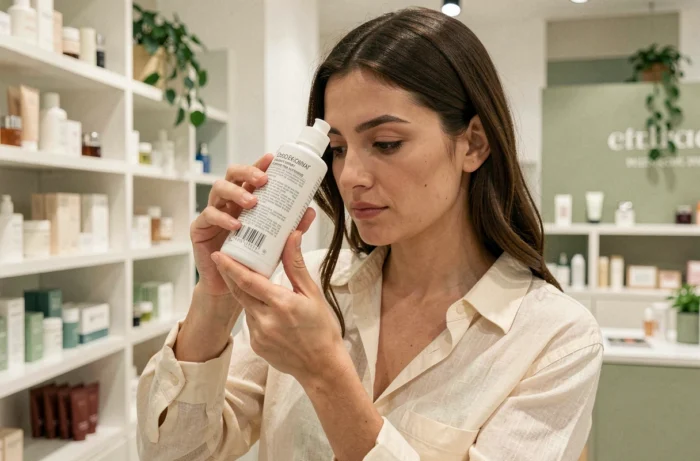
Nocibé is a retail brand, not a manufacturer of cosmetic formulas. This distinction radically changes the perspective when trying to determine whether the Nocibé brand is tested on animals or if it is a misunderstanding. The brand distributes hundreds of brands with very heterogeneous policies, making any binary answer insufficient.
Douglas Group and the absence of independent cruelty-free certification
Nocibé belongs to the Douglas Group, the leading European distributor of selective perfumery. Douglas is not listed in the Leaping Bunny (Cruelty Free International) databases nor in the PETA Beauty Without Bunnies program.
This absence has a direct consequence: no third-party organization has audited the entire supply chain of the group, from raw material suppliers to formulation subcontractors. When Nocibé claims to comply with European regulations and not to test its products on animals, the assertion is based on legal compliance, not on independent verification covering every link.
We regularly observe this confusion in the industry: regulatory compliance and cruelty-free certification are not synonymous. The former prohibits certain downstream tests. The latter requires a comprehensive audit, including in export markets where local legislation may require animal testing. A detailed article addresses whether Nocibé is tested on animals is a fact or a mix-up.
European cosmetics regulation and its real limits
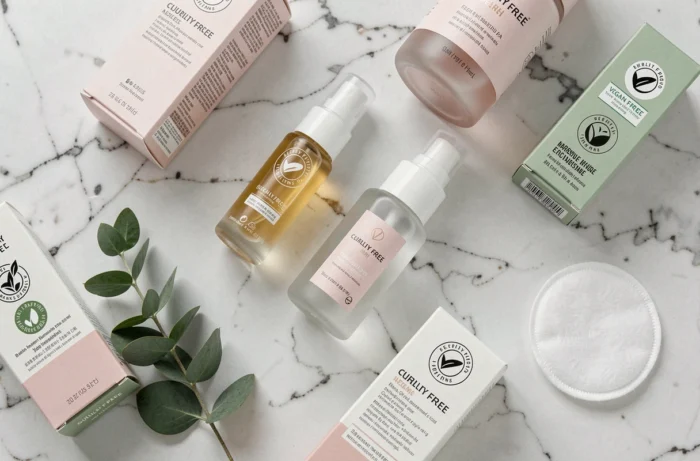
Regulation EC 1223/2009 prohibits the marketing in the European Union of finished cosmetic products tested on animals, as well as ingredients tested exclusively for cosmetic purposes. The total ban on testing ingredients has been in effect since 2013.
The framework seems clear, but it contains a gray area often overlooked. An ingredient used in cosmetics may also fall under the REACH regulation on chemical substances. In this case, the ECHA (European Chemicals Agency) may require animal testing to assess the toxicity of the substance in a non-cosmetic context. The same ingredient can therefore be tested on animals under REACH while being included in a cosmetic product declared compliant with regulation 1223/2009.
The roadmap adopted by the European Commission on June 1, 2026, following the citizen initiative “Save cruelty-free cosmetics,” aims to gradually reduce this dependence on animal testing for chemical substances beyond just the cosmetic scope. As long as this transition is not completed, European compliance does not guarantee the total absence of animal testing on every ingredient.
Nocibé cruelty-free: what the brand’s commitment really covers
Nocibé claims not to test its private label products on animals and to commit to developing alternative methods. Regarding third-party brands sold in-store and online, the responsibility for the cruelty-free policy lies with each brand individually.
For a consumer wishing to verify the extent of this commitment, several points deserve attention:
- Nocibé brand products follow European regulations, but the Douglas Group does not hold a Leaping Bunny certification or PETA listing for its entire portfolio.
- The brands distributed by Nocibé include groups like L’Oréal, whose animal testing policy remains debated due to their presence in the Chinese market (where testing may be required by local authorities for certain product categories).
- The “Cruelty Free” and “Vegan” labels displayed on some products in-store correspond to certifications specific to each brand, not a global guarantee from the retailer.
In practice, shopping at Nocibé does not automatically mean buying cruelty-free. We recommend checking brand by brand rather than relying on the distributor’s general positioning.
Identifying a cruelty-free product at Nocibé
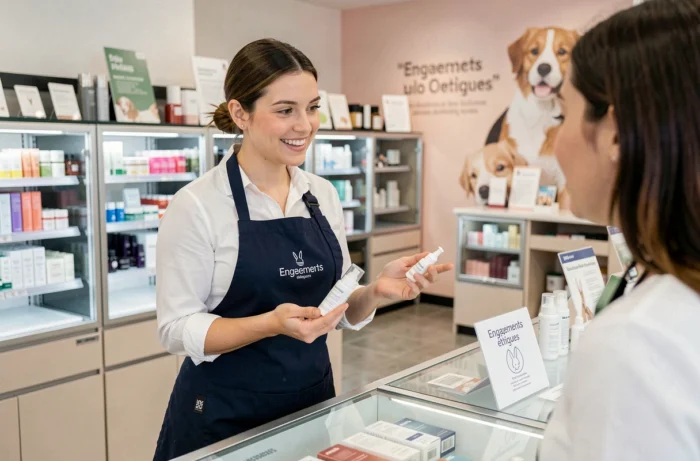
Reliable identification relies on certification logos present on the packaging, not on the distributor’s marketing claims. Two standards dominate the market:
- Leaping Bunny: a program of Cruelty Free International, requiring a contractual commitment from the brand and its suppliers not to conduct any animal testing, with periodic audits.
- PETA Beauty Without Bunnies: a self-declaration database where brands certify on their honor not to test on animals, with a distinction between “cruelty-free” and “cruelty-free and vegan.”
- The mention “Vegan” alone does not guarantee the absence of animal testing. It only certifies the absence of animal-derived ingredients in the formula.
On the Nocibé website, some product sheets display the cruelty-free pictogram of the relevant brand. However, the retailer does not offer a dedicated search filter for cruelty-free certified products, making it challenging for a buyer concerned about this criterion.
Cross-referencing the list of brands available at Nocibé with the Leaping Bunny and PETA databases remains the most reliable method. It requires extra effort, but it is the only way to go beyond generic statements.
The question “Does Nocibé test on animals?” therefore calls for a two-part answer. The retailer, as a distributor operating under European law, does not conduct animal testing on its own products. But its catalog includes brands with varying policies, and the absence of independent certification at the Douglas Group level prevents considering the entire offering as cruelty-free. The informed consumer checks the brand, not the point of sale.