
A one-piece swimsuit that compresses at the bust, pulls at the crotch, or marks the straps does not only pose a comfort issue. The constant tension on the seams accelerates the degradation of elastic fibers and shortens the garment’s lifespan. Before attempting an enlargement, we recommend identifying the main tension area: bust, hips, or torso length, as the method differs depending on the case.
Behavior of elastane fibers under thermal stress
Elastane (often referred to by the brand name Lycra) loses its elastic memory when exposed to prolonged heat. This mechanism allows for relaxing a swimsuit that is too tight, but it is also what destroys it if the temperature exceeds a certain threshold.
Further reading : Tips and Practical Advice for Effective Daily House Cleaning
A bath in lukewarm water, between the temperature of a half-open tap and that of a comfortable bath, is enough to soften the fibers without breaking them. Water hotter than this threshold causes irreversible contraction of the polyester or polyamide that makes up most of the fabric. Elastane relaxes in lukewarm water but is destroyed in hot water: the margin is narrow.
We observe that pool chlorine and UV rays exacerbate this phenomenon. A swimsuit regularly exposed to chlorine sees its elastic fibers stiffen, resulting in that “cardboard” fabric feel that no longer returns to its original shape. A systematic rinse in cold water after each swim significantly slows down this degradation.
Read also : How to Recognize Different Skin Diseases: Symptoms and Practical Tips
For those looking to find out how to enlarge a one-piece swimsuit, understanding this fiber mechanics helps avoid ruining a swimsuit on the first attempt at enlargement.
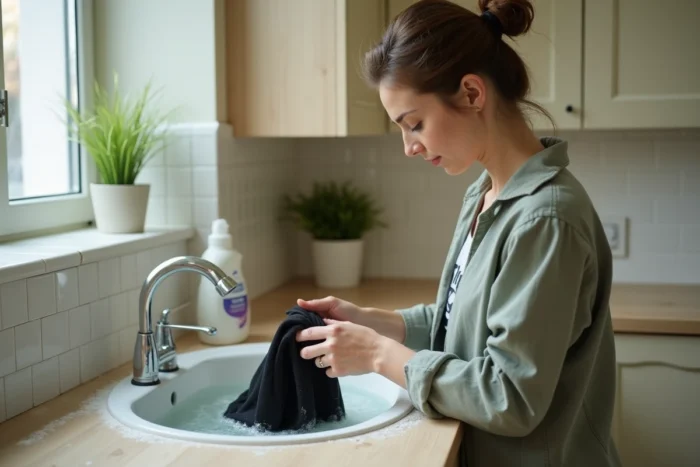
Relaxing a too-tight one-piece swimsuit: targeted soaking method
The global soaking technique (immersing the entire swimsuit) lacks precision. If only the bust area is too tight, relaxing the entire swimsuit creates excess fabric at the hips or back. We recommend a targeted soaking.
Stretching the tension area without distorting the rest
Fill a sink with lukewarm water and add a tablespoon of white vinegar. The vinegar temporarily softens the fibers without attacking the dyes, unlike other household products. Immerse only the area to be relaxed for about fifteen minutes.
Remove the swimsuit without wringing it out. Put it on while still damp and wear it around your home for half an hour. The wet fabric conforms to the body’s shape and retains that shape as it dries. This is the same principle as blocking used in knitting.
If the tension is at the crotch level (insufficient torso length), this method alone is not enough. The distance between the straps and the crotch is limited by the structural seams. In this case, adjusting the straps or adding a sewn extension remains the only sustainable solution.
Using blocks or objects to maintain the stretch
After soaking, lay the swimsuit flat on a towel and insert a rigid object (box, book wrapped in plastic) into the area to be enlarged. Allow it to dry completely in the open air, in the shade. Drying in direct sunlight or in a dryer will undo the work by contracting the fibers again.
- Too tight bust: insert a slightly inflated balloon into the cups, adjusting the pressure to achieve the desired tension without straining the seams
- Too narrow hips: stretch the side area on a wide hanger or a chair back, securing with clothespins
- Straps that compress the shoulders: do not pull them dry, as this breaks the fibers. Wet them first, then adjust the length if the model allows
Sewing modifications to sustainably enlarge a one-piece swimsuit
When the fabric has reached its stretching limit, only a sewing intervention can increase the size. This type of alteration requires equipment suitable for stretch textiles.
A standard needle pierces and tears the stitches of elastic fabric. You need to use a ballpoint needle (jersey or stretch type) and elastic thread or fine polyester thread. A sewing machine with a zigzag stitch or overlock stitch is preferable to hand sewing, which produces rigid seams on stretchy fabric.
Adding side panels in compatible fabric
The most common modification involves opening the side seams and inserting a matching swimsuit fabric panel. The fabric must have a comparable elasticity rate to the original fabric; otherwise, the added area will not move the same way and will create unsightly wrinkles.
- Cut the panel into a triangle or strip, depending on the amount of fabric to be added
- Sew with a zigzag stitch with a narrow seam allowance to limit thickness
- Overlock the cut edges to prevent fraying when in contact with chlorine and salt
- Test the stretch of the modified swimsuit before wearing: gently pull on the new seams to check that they follow the movement
This technique allows for gaining one to two sizes depending on the width of the panels. Beyond that, the silhouette of the swimsuit changes too much, and the aesthetic result deteriorates.

Maintenance to prevent a swimsuit from shrinking
Hand washing in cold water remains the only maintenance method that preserves elasticity in the long term. Machine washing, even on a delicate cycle, subjects the fibers to mechanical stress that prematurely fatigues them.
After each use in the pool, rinse the swimsuit in cold clear water to remove chlorine. Gently press it in a towel without twisting. Flat drying in the shade is the only method that does not alter the fabric structure.
Never store a still damp swimsuit in a plastic bag, even for a few hours. Stagnant moisture promotes the proliferation of mold that attacks elastic fibers. A breathable fabric bag or a simple mesh bag is sufficient for transport.
The European regulation ESPR will make a digital passport for textiles, including swimsuits, mandatory starting from the spring-summer 2028 collections. This document will detail the exact composition of the fibers, specific maintenance instructions, and wash resistance. A tool that, in the long run, will allow knowing before purchase whether a swimsuit tolerates the relaxation techniques described above.