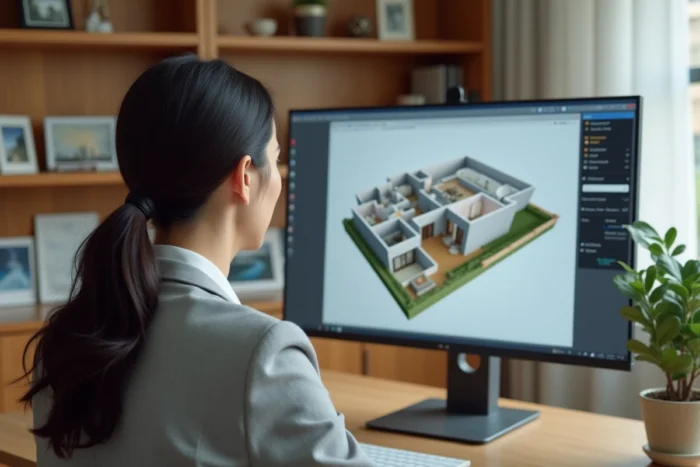
A virtual home tour relies on a collection of panoramic photographs (or 3D scans) linked together to allow a buyer to navigate through each room from their screen. The production cost of this type of service has been halved in five years, but the final bill still varies from simple to triple depending on the technical choices of the seller or the agency.
Several recurring mistakes explain these price discrepancies, and most can be corrected even before the first scan.
Quality level and price: the trap of the “luxury” format that has become standard
The first mistake that drives up the bill is paying a premium rate for a service that has become common. When the virtual tour was still rare, providers charged a high technological premium. Today, the majority of agencies offer this service, and the production cost has significantly decreased thanks to the democratization of 360° cameras and stitching software.
Paying a premium rate is only justified if the service includes a real added value: complete 3D modeling with an interactive floor plan, integration of measurements room by room, or compatibility with a virtual reality headset. If the deliverable is limited to a series of clickable panoramas, the price should reflect this level of service, not that of five years ago.
A good reflex before signing: ask for the details of the deliverable (number of capture points, distribution format, hosting duration) and compare with at least two other quotes. An article detailing the cost items of an immersive lamaison360 tour on Immovalys helps to better understand the actual pricing structure.
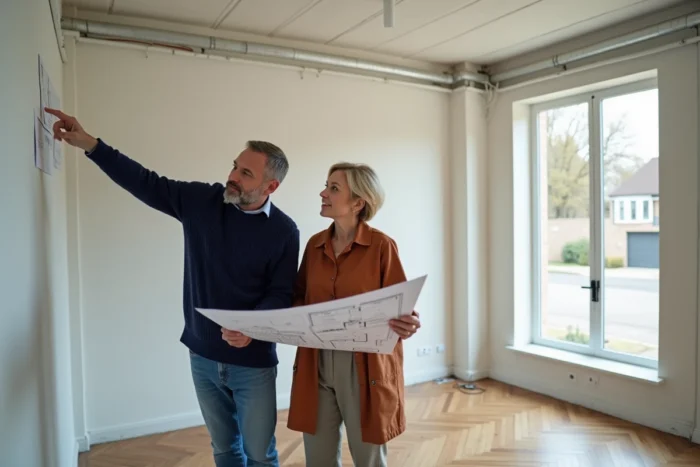
Preparing the property before the scan: every defect captured is costly to correct
The second source of additional costs occurs before the shooting. Every misplaced object or poorly lit room will be frozen in the tour, and correcting these defects in post-production (panorama retouching, removing elements, cropping) takes billable time.
Unlike a classic photo where the photographer chooses a flattering angle, a 360° capture records the entirety of the space. An unsightly cable, a mirror reflecting the tripod, a half-drawn blind: everything appears.
What generates paid retouching
- Mirrors and reflective surfaces that capture the operator or equipment, requiring cloning work in post-production
- Mixed lighting (neon plus natural light) that creates inconsistent color zones, necessitating image-by-image rebalancing
- Bulky furniture or visible clutter in each panorama, which some providers offer to “digitally clean” for an additional fee
Home staging, even minimal, before the capture remains the most effective way to reduce post-production costs. Tidying up, clearing work surfaces, turning off neon lights if daylight is sufficient: these free gestures avoid hours of retouching.
Number of capture points: the misunderstanding that inflates the quote
The price of a virtual tour largely depends on the number of “stations” (the positions where the 360° camera is set up to capture a panorama). The larger the property, the more stations are needed. So far, the logic is simple.
The frequent mistake is to multiply capture points in spaces that add no value for the buyer. Capturing every nook of a hallway, a two-square-meter pantry, or a landing without notable features adds stations to the quote without improving the navigation experience.
A thoughtful capture plan targets high perceived value rooms: living room, kitchen, master bedroom, bathroom, outdoors. The rest can be covered by one or two connecting stations, sufficient to keep the journey smooth. Asking the provider for a projected capture plan before the shooting day allows for validating the number of stations together and avoiding unpleasant surprises on the bill.

Hosting and distribution: recurring fees often overlooked
Once the tour is produced, it must be hosted somewhere to remain accessible online. Some platforms charge a monthly subscription, others an annual fee, and some include hosting in the initial price but limit the duration to a few months.
If the property remains for sale longer than expected, hosting fees accumulate silently. This is a rarely discussed item at the time of the quote, but it can represent a significant portion of the total cost over a six-month mandate or more.
Points to check in the service contract
- The duration of hosting included in the initial price and the renewal rate
- The possibility of exporting raw files to re-host elsewhere if the provider changes their terms
- The compatibility of the distribution format with major real estate portals (some proprietary formats do not integrate on all listing sites)
An open format and recoverable files protect against dependence on a single provider. If the tour needs to be transferred to another host or distribution tool, the operation will be simple and free instead of requiring a new shoot.
Virtual tour and sale price: an absence that costs more than a presence
The question of the cost of the virtual tour often masks a broader risk. As long as this type of content remained minority in real estate listings, it constituted a competitive advantage. Today, past a certain threshold of distribution in the market, a property without a virtual tour is perceived as incomplete by buyers, which can lead them to negotiate more aggressively on the price.
The issue is therefore no longer just about managing the production budget, but ensuring that the tour reaches a sufficient quality level so as not to harm the property’s perception. A poorly executed tour (blurry images, confusing navigation, dark rooms) can leave a stronger negative impression than a simple gallery of well-framed photos.
Balancing between production cost and the quality level expected by buyers in your local market remains the real lever. A targeted capture plan, a well-prepared property before the shoot, and a clear hosting contract are enough to keep the bill within reasonable proportions, without sacrificing the commercial effectiveness of the listing.