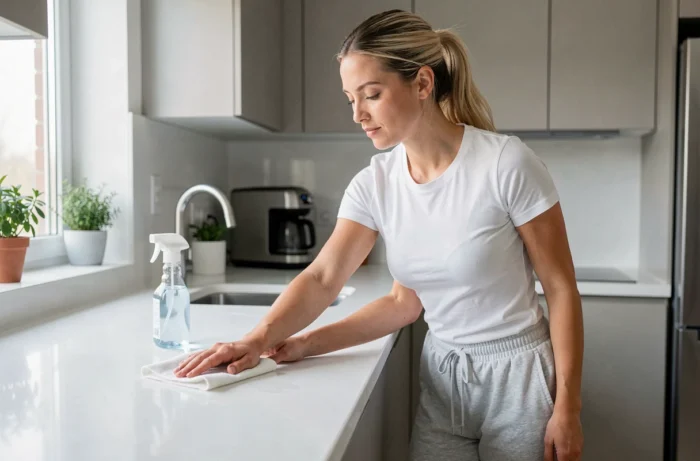
The daily cleaning of a house relies on a principle that is often overlooked: the order in which tasks are performed radically changes the final result. Cleaning a surface that has already been re-contaminated by dust displaced from a neighboring piece of furniture is like working twice. Effective daily cleaning does not require more time, but a better understanding of the logic of contamination between areas.
Cross-contamination in daily cleaning: clean from least dirty to most dirty
The classic rule of “top to bottom” is not enough. It describes a vertical axis but ignores the horizontal dimension of the problem. A kitchen where a meal has just been prepared is more contaminated than a living room that is simply dusty.
Cleaning from least dirty to most dirty protects already treated areas. Specifically, this means starting with the living areas (living room, bedrooms), moving on to the kitchen, and then finishing with the bathrooms. Within the same room, dry surfaces (shelves, furniture) are treated first before wet surfaces (countertops, sinks).
This logic also applies to tools. A cloth used in the bathroom should never be used afterward on a kitchen countertop. This is where color coding of microfiber cloths comes into play: one color for each type of area (bathrooms, kitchen, general surfaces, windows).
This system, common in professional cleaning, prevents cross-contamination between rooms without having to wash each cloth between uses. To delve deeper into these methods and find guides tailored to each surface, the Cleaning Guide details protocols room by room.
Vacuum cleaner filtration: a neglected maintenance task that reduces cleaning efficiency
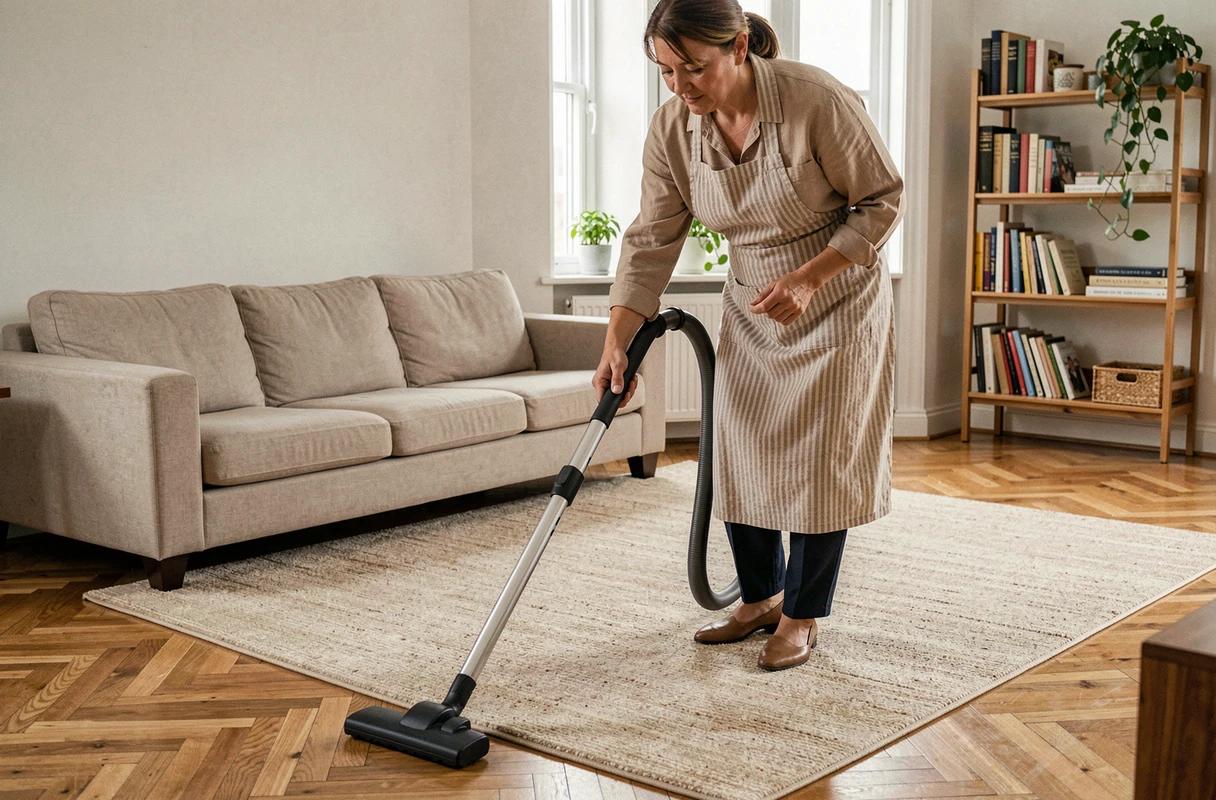
Vacuuming daily on floors and upholstered furniture seems sufficient. The reality is more nuanced: a vacuum cleaner with a clogged filter releases some of the particles it sucks up back into the air.
Models equipped with a HEPA filter trap allergens and fine particles, provided that this filter is cleaned or replaced according to the manufacturer’s recommendations. A saturated filter decreases suction power and turns the device into a mere dust blower.
Three maintenance points extend the lifespan and efficiency of a vacuum cleaner:
- Empty the bin or change the bag before it is three-quarters full, as beyond that, suction significantly weakens.
- Rinse the washable filter with cold water and let it dry completely before reassembling (a wet filter promotes mold).
- Check the rotating brush to remove hair and fibers that are wrapped around it, which hinder rotation and reduce contact with the floor.
A well-maintained vacuum cleaner captures more dust in a single pass. This is a direct time saver in the daily routine.
Ventilation and indoor air quality: the action that precedes all cleaning
Dusting furniture and vacuuming floors only addresses part of the problem. Indoor air concentrates household pollutants (volatile organic compounds emitted by cleaning products, residual humidity, suspended particles) that cleaning alone cannot eliminate.
Ventilating each room before starting cleaning allows for air renewal and reduces the ambient humidity level. This action also limits the resuspension of dust dislodged during cleaning: with windows open, some of the lifted particles naturally escape.
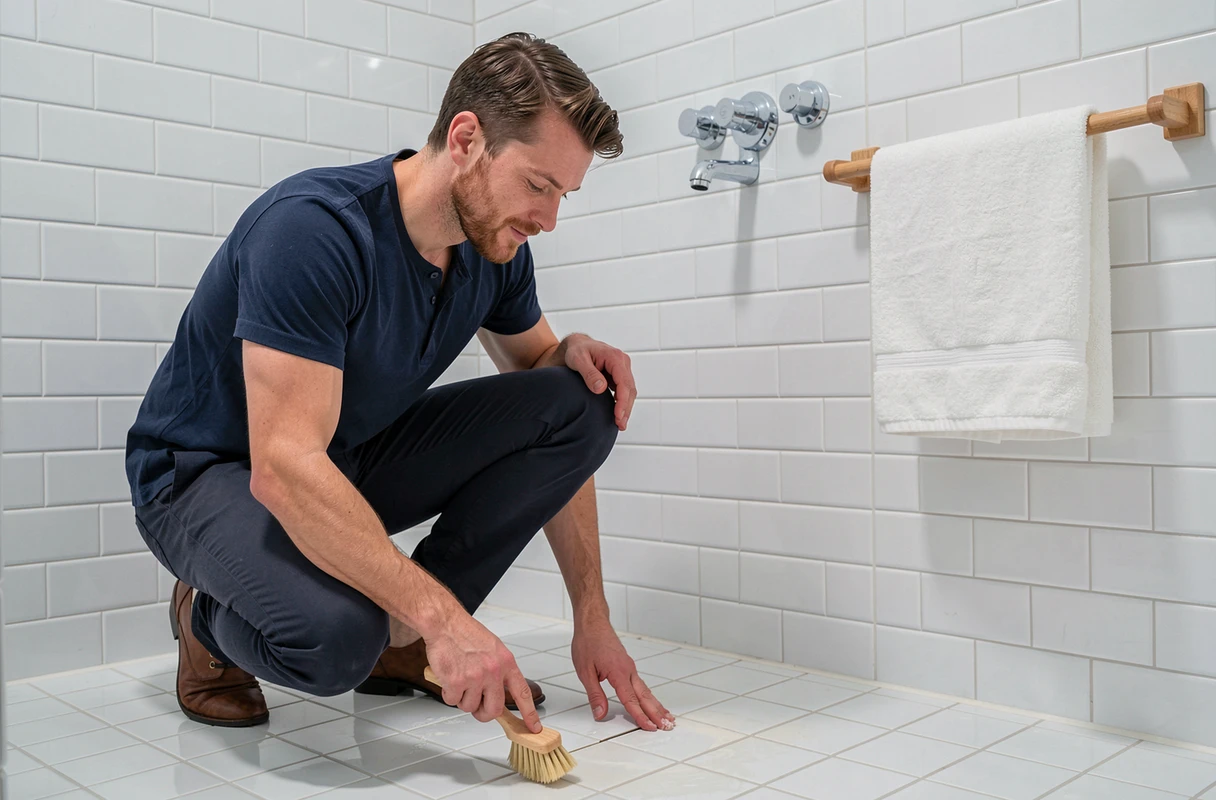
Ventilation plays a direct role in persistent odors. In a kitchen, opening the window after cooking and before cleaning surfaces prevents trapping greasy vapors under a layer of product. In a bathroom, reducing humidity through ventilation slows the development of mold on grout and shower curtains.
Micro-cleaning routines: limit each session to fifteen minutes
Classic weekly cleaning schedules work on paper. In practice, they collapse as soon as a busy day prevents completing the planned program. The alternative relies on short, daily sessions, calibrated for a fixed duration rather than a list of tasks to finish.
The principle is simple: dedicate a slot of ten to fifteen minutes to cleaning, then stop, even if everything is not done. This time constraint forces prioritization. You first address what deteriorates the fastest (dishes, kitchen surfaces, entryway floor), and less urgent tasks (dusting high shelves, cleaning windows) rotate from day to day.
This approach has a useful side effect: regularity prevents the accumulation of stubborn dirt. A stovetop wiped down every evening never requires scrubbing. A sink rinsed after use does not develop resistant limescale stains.
Typical sequence for a fifteen-minute session
- Ventilate the targeted room, gather stray objects, and return them to their place.
- Wipe surfaces with a microfiber cloth suitable for the area (kitchen, bathroom, or general dust).
- Vacuum or sweep the floor of the room, focusing on high-traffic areas.
- Conclude the session by rinsing the cloth used and putting away the materials.
This format works because it eliminates the “cleaning marathon” effect that discourages. A brief daily maintenance keeps the house in a stable state without requiring large catch-up sessions on the weekend.
Domestic cleaning becomes more efficient when it is based on a logical order, properly maintained tools, and short but regular sessions. Fifteen minutes every day is better than half a day every two weeks. Surfaces remain easier to clean, indoor air stays healthier, and the total time spent on cleaning decreases over the week.