In France, around 750,000 people over 60 live in a state of “social death”, according to the 2025 Barometer of the Little Brothers of the Poor. This figure has increased by about 150% in less than ten years. Discussing the well-being of seniors after 60 cannot be limited to a list of physical exercises or dietary recipes.
The factors that determine well-being at this age are also economic, relational, and psychological, and they do not affect everyone in the same way.
Isolation of seniors: an underestimated health factor
SERP competitors treat social connection as just one piece of advice among others, on par with “sleep well” or “adopt a dog.” Recent data paints a more concerning picture.
The most exposed to extreme isolation are those aged 80 and above, as well as seniors living in poverty. The transition to retirement is a real earthquake for social relationships. The loss of the professional framework eliminates a daily social network that many do not replace.
Isolation is not just an inconvenience. It exacerbates anxiety, stress, and accelerates cognitive decline. In the seniors section of Le Coin du Bien-être, you can find concrete ways to address these issues beyond simple general advice.
Well-being after 60 primarily hinges on the quality of close relationships. The 2025 Barometer confirms that these connections remain the pivots of sociability among the elderly. Maintaining regular contact with neighbors, local associations, or loved ones offers more protection than any dietary supplement.
Physical activity after 60: frequency or intensity, what does research say
Articles on senior sports almost all recommend walking, yoga, swimming, and cycling. These activities are indeed suitable. The real question is less about the choice of sport than about the frequency of practice.
For an active senior who does not have daily time, concentrating sessions over two days can be a valid option, provided the intensity is adapted to their physical condition.
Muscle strengthening and joint preservation
With age, muscle mass and bone density decrease. Muscle strengthening, even light, slows this loss. Two to three sessions per week are sufficient to maintain the strength necessary for daily tasks.
- Bodyweight exercises (assisted squats, wall push-ups) engage the muscles without overloading the joints, making them accessible even in cases of mild osteoarthritis.
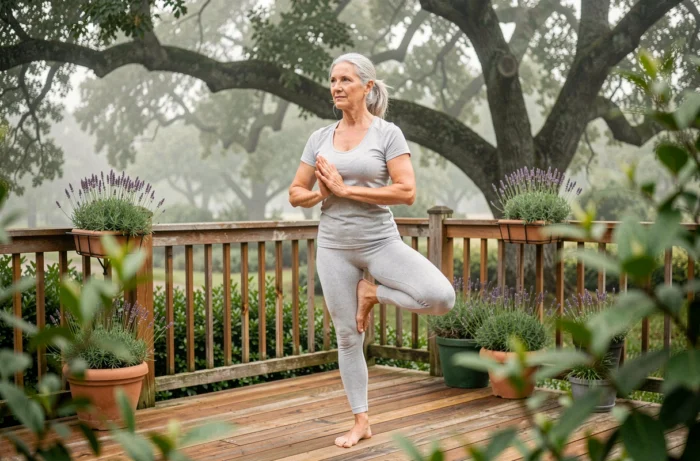
- Yoga and Pilates combine muscle work, flexibility, and balance, three components that reduce the risk of falls.
- Cycling (including stationary bikes) preserves knee joints while stimulating the cardiovascular system, provided that resistance is not forced.
A prior medical evaluation remains essential, particularly for cardiovascular assessment and balance analysis. Field reports vary on this point: some doctors consider a simple clinical examination sufficient, while others recommend a complete stress test after 65.
Financial insecurity of seniors: the invisible barrier to well-being
Articles on “senior well-being” often overlook the economic dimension. Eating balanced meals, engaging in regular physical activity, consulting a specialist: all of this comes at a cost.
The non-application for the Old Age Solidarity Allowance (Aspa) remains a documented issue in several parliamentary reports. Eligible seniors do not request this assistance, either due to ignorance or fear of a claim on their estate. Poverty directly limits access to care and activities that are essential for maintaining health.
The available data does not allow for precise quantification of the number of seniors affected by this non-application. However, the work of the inquiry commission on elderly poverty confirms that those over 75 and single women are overrepresented among potential beneficiaries who do not claim their rights.
Cognitive health after 60: beyond crossword puzzles
Classic recommendations (crossword puzzles, sudoku, reading) only cover part of cognitive stimulation. Research shows that learning new skills better protects the brain than repeating mastered exercises.
Learning a language, starting to play a musical instrument, or taking an online course engages different neural circuits than those activated by usual logic games. The perceived difficulty is a positive marker: if the activity is easy, it stimulates little.
Sleep as a cognitive lever
The link between sleep quality and cognitive functions is particularly pronounced after 60. Going to bed at fixed times helps, but is not enough. Deep sleep duration naturally decreases with age, making each disruptive factor (late screen time, undiagnosed sleep apnea, sedative medications) more problematic.
Regular medical follow-up including screening for sleep disorders should be part of the annual health assessment for seniors, just like monitoring blood pressure or cholesterol.
Staying fit after 60 depends on factors that go beyond individual will. Social isolation, financial constraints, and access to care weigh as heavily as personal habits. Thinking about senior well-being as a collective issue, and not just as a list of good practices, changes the way we approach the subject.