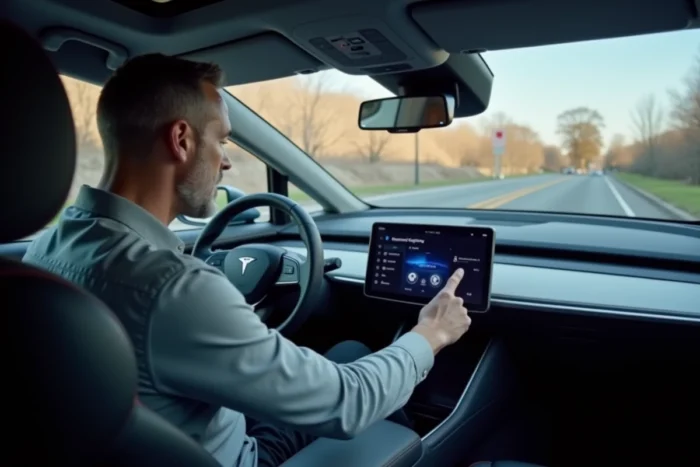
Activating autonomous driving on a recent vehicle is not just a matter of pressing a button. Depending on the manufacturer, model, and country, the steps range from a simple setting in a menu to a complete process including an onboard tutorial and quiz validation. Understanding these differences helps avoid unpleasant surprises at delivery or after a software update.
Conditional Activation: What Each Manufacturer Requires Before Unlocking Autonomous Mode
The recent trend goes beyond Tesla. Several manufacturers, particularly Chinese ones, now require onboard training followed by a mandatory quiz before allowing the driver to use hands-free driving functions. The vehicle simply refuses to activate the mode until the driver has validated each step.
At Tesla, the process involves a series of software checks, an explanatory video, and an integrated comprehension test on the central screen. Other brands add an extra layer by verifying that the driver has actually traveled a minimum number of kilometers with lower-level aids activated.
A detailed guide covering activating autonomous driving on Been Online lists the procedures manufacturer by manufacturer, allowing for comparison of requirements even before purchase.
| Criteria | Tesla (FSD) | Recent Chinese Manufacturers | Classic European ADAS |
|---|---|---|---|
| Mandatory Video Tutorial | Yes, on central screen | Yes, with integrated quiz | No (paper manual) |
| Validation Quiz | Yes | Yes, minimum score required | No |
| Required Pre-Driving Mileage | Not specified | Variable by brand | No |
| Remote Activation (OTA) | Yes | Yes | Rarely |
| Claimed Autonomy Level | Level 2+ | Level 2 to 2+ | Level 1 to 2 |

Level 2+ and Driver Responsibility: What Activation Implies Legally
Tesla’s FSD is officially described as a level 2+ autonomy system. The car manages acceleration, braking, and steering in urban areas as well as on highways. The driver must keep their hands on the wheel and remain attentive at all times.
This point changes the very nature of activation. Unlocking autonomous mode does not transfer responsibility to the vehicle. The driver fully assumes responsibility in the event of an accident, regardless of the activated mode. This legal reality applies in all European countries that have authorized these systems.
Belgium recently approved Tesla’s autonomous driving system, joining a growing number of European countries that regulate these technologies. In contrast, the regulatory framework remains fragmented: each country sets its own conditions for use on open roads.
Difference Between Software Activation and Legal Authorization
Activating the mode in the car’s menu does not mean having the right to use it everywhere. A vehicle may offer level 2+ functions that are not yet approved in the country where it is being driven. Checking local legislation before activating these functions avoids penalties that can range from fines to criminal liability in the event of an accident.
Concrete Steps for Activation on the Vehicle’s Screen
The procedure varies by manufacturer, but a common foundation emerges for vehicles equipped with a central touchscreen.
- Access the “Autopilot,” “Assisted Driving,” or “ADAS” menu in the vehicle’s settings, depending on the manufacturer’s terminology
- Watch the integrated video tutorial (mandatory at Tesla and several Chinese brands) and then validate the associated quiz with the minimum required score
- Configure the following settings: following distance, maximum speed, and sensitivity of visual and auditory alerts
- Perform an initial calibration drive: sensors, cameras, and any LiDAR need several kilometers to calibrate properly
- Check that the most recent software update (OTA) is installed, as some functions only appear after a specific patch
The initial calibration of the sensors is a step that many drivers underestimate. Without complete calibration, the system may operate in degraded mode and disable certain advanced functions such as automatic lane changing.
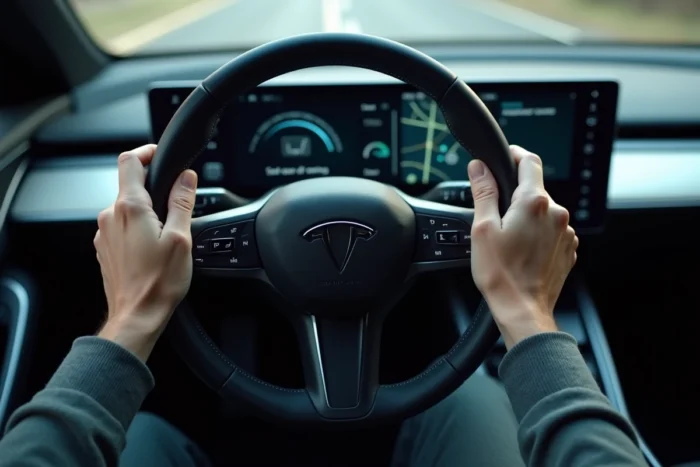
OTA Updates and Progressive Activation of Autonomous Functions
Manufacturers offering level 2+ autonomous driving deploy functions in waves, via over-the-air software updates (OTA). A vehicle delivered with complete hardware (cameras, radar, dedicated processor) may see new capabilities appear several months after purchase.
This model of progressive activation means that the driver must regularly check the status of their software. On a Tesla vehicle, the central screen displays available updates and indicates newly unlocked functions. Other manufacturers send a notification through the mobile app associated with the vehicle.
Adaptive Electronics and Learning Driving Habits
Some recent systems incorporate adaptive electronics that learn the owner’s driving habits. The vehicle gradually adjusts braking distance, accelerator responsiveness, and cornering behavior based on the recorded driving style. This personalization occurs automatically after the initial activation, without driver intervention.
Portugal will allow testing of autonomous vehicles on its roads starting in the summer of 2026, while Geneva has hosted a vote on the first global rules governing fully autonomous vehicles. These regulatory advances will determine which functions manufacturers will be able to activate in each country over the coming years. The ease of activation thus depends as much on the embedded software as on the legal framework in place at the time the driver turns the key.