The Family Allowance Fund pays benefits based on declarations. Housing allowances, RSA, family allowances: each aid is based on information provided by the beneficiary regarding their resources, family situation, and housing. The CAF home check is one of the verification measures used to ensure that this data corresponds to reality.
Data cross-checking and algorithms: what triggers a CAF home check
Competitors often describe the check as an isolated visit. The reality is more technical. Before an agent comes to your home, your file has generally been flagged by an automated data cross-check between administrations. The CAF exchanges files with the General Directorate of Public Finances, the CNAV, and other social organizations.
These exchanges help detect inconsistencies: declared income to the CAF that does not match what has been reported to the tax authorities, unreported changes in family situation, or different addresses according to the databases. When an anomaly arises, the file goes into manual verification.
The document check (request for supporting documents by mail) may be enough to dispel doubts. If inconsistencies persist or if the situation requires a concrete assessment of the housing and household composition, the CAF then schedules a home visit. To understand the steps of a CAF home check, it is important to keep in mind that the visit rarely occurs randomly: it follows an automated alert or a file deemed a priority.
The most frequently targeted situations:
- A change in family situation (separation, living as a couple) that is either unreported or reported late, identified by a discrepancy between tax bases and the CAF file
- Declared resources significantly lower than those recorded by the tax administration, especially for RSA beneficiaries
- A residence declared as the main home while other indicators suggest a different address, impacting the calculation of APL
- A request for housing assistance for a property whose characteristics (size, occupancy) raise questions

Suspension of CAF rights during an in-depth check
One aspect rarely detailed concerns the management of your benefits during the verification process. When the file presents inconsistencies deemed significant, the CAF may suspend the payment of benefits during the check. This suspension is not a penalty: it is a precautionary measure.
The duration of this suspension depends on the complexity of the file and the responsiveness of the beneficiary in providing the requested documents. Some beneficiaries see their rights restored in a few weeks, while others wait several months. Field reports vary on this point: some beneficiaries report very short delays when the file is complete, while others describe prolonged blockages due to a lack of appropriate supporting documents.
To limit this period of uncertainty, the logic is simple: respond quickly to any request for documents. Tax notices, rent receipts, proof of residence, family situation certificates – each missing document prolongs the procedure.
Concrete process of the CAF controller’s visit
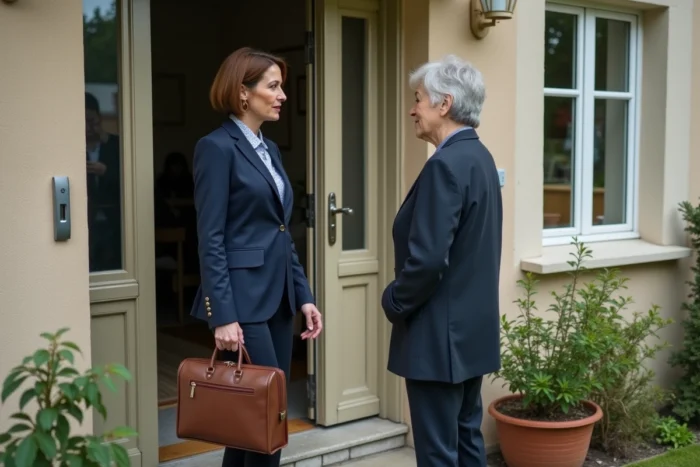
The CAF controller is a sworn agent. They usually make an appointment by phone or mail before arriving. On the day of the visit, they are required to present their professional card.
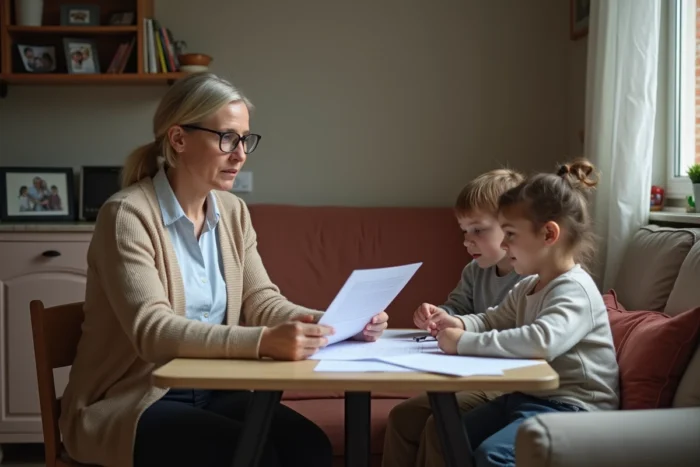
The interview focuses on your family situation, professional status, and housing. The controller may observe the layout of the home to verify the declared household composition. For example, the presence of personal belongings belonging to another person may raise questions about an undeclared couple’s living arrangement.
The beneficiary has obligations but also rights. Refusing the check may lead to a suspension of benefits. However, the controller cannot force entry into the home without your consent. The beneficiary may also request to be assisted by a person of their choice during the interview.
Documents to prepare before the visit
The controller will likely request documents directly related to the benefits paid. Having these documents readily available speeds up the process and reduces the risk of prolonged suspension:
- Most recent tax notice and proof of resources (pay slips, Pôle emploi certificates)
- Rent receipts or property title, as well as recent proof of residence
- Family record book, divorce judgment, or PACS certificate depending on the situation
- Any document related to the benefits received (APL entitlement notification, RSA, family allowances)
Recourse and possible outcomes after a CAF check
At the end of the visit, several scenarios exist. If everything is in order, your rights are confirmed without modification. It may also happen that the check reveals an unexercised right, and the CAF can then direct you to aids you were not receiving.
The most feared case is the detection of an overpayment. If the CAF finds that benefits have been paid based on inaccurate information, it issues an undue payment: an amount to be reimbursed. The amount depends on the discrepancy between what was paid and what should have been, as well as the duration for which the error persisted.
In case of disagreement with the conclusions of the check, the beneficiary has a right of appeal to the amicable appeal commission of their CAF. This appeal must be made within two months after notification of the decision. If the commission’s response is unsatisfactory, a contentious appeal to the administrative court remains possible.
The line between good faith error and fraud determines the severity of the consequences. A late declaration of a change in situation results in reimbursement, but rarely a penalty. A voluntary and repeated concealment can lead to financial sanctions, or even criminal prosecution in the most serious cases.
The CAF home check is part of a broader verification system, mostly automated. The physical visit represents only a fraction, reserved for files where remote verifications are insufficient to decide. Keeping your documents up to date and reporting any changes in situation promptly remains the most reliable way to avoid a lengthy procedure and its consequences on the payment of aids.