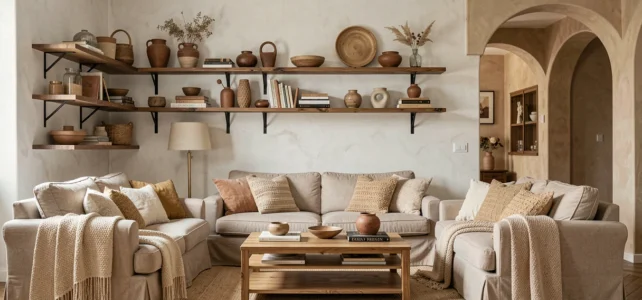
Transforming an interior no longer relies on a single style applied uniformly. The dominant trend is based on what industry professionals call practical personalization: each aesthetic choice responds to a concrete use, whether for reading, remote work, or relaxation. Here are ten concrete ideas to rethink your spaces with this logic.
1. Reading nook built into a wall alcove
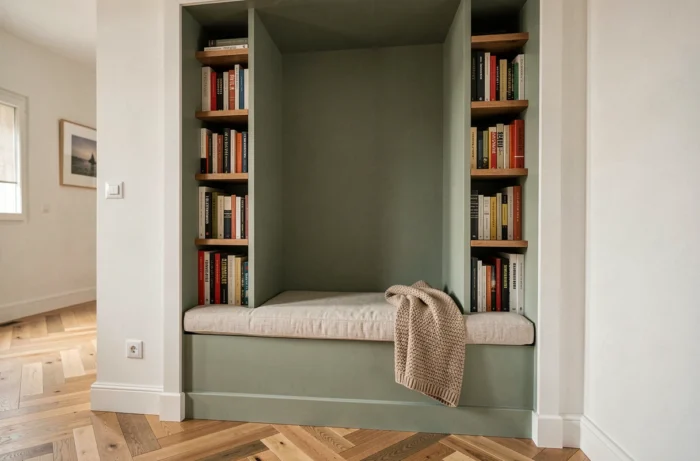
References to reading nooks in American real estate listings have increased by 48% year-over-year according to data compiled from Zillow in 2026. This micro-space, far from being a decorative gimmick, influences the perceived value of a home.
The idea is to utilize an existing recess or create a niche with two shallow partitions. A cushioned seat wedged between the walls, an adjustable wall lamp, and two shelves above are sufficient. The result is a usable refuge that can be enjoyed daily, not just a photo-op for Pinterest.
Browsing decor inspiration on Déco en Vogue allows you to visualize how this type of layout adapts to different surfaces, including studios.
2. Raw lime plaster on an accent wall
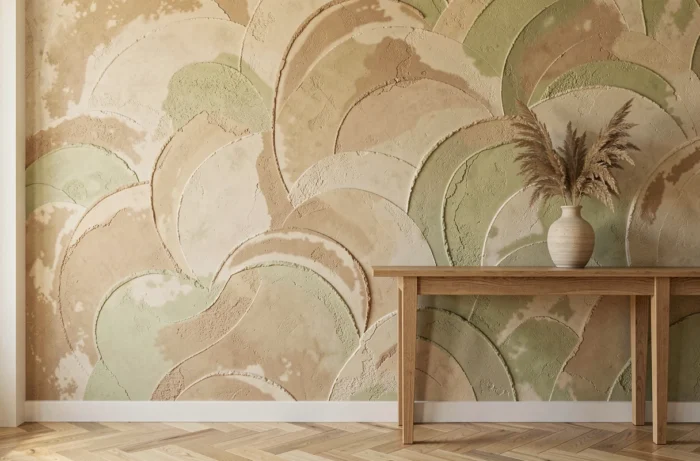
Raw textures and calming colors mark the return of artisanal finishes. Lime plaster, applied with a trowel on a single wall in the living room, creates an irregular depth effect that no matte paint can replicate.
This treatment works particularly well behind a sofa or a headboard. The natural hue of lime ranges from off-white to warm beige, which anchors the room without closing it off. The cost remains moderate compared to stone cladding, and maintenance is limited to occasional dusting.
3. Raw wood coffee table with storage function
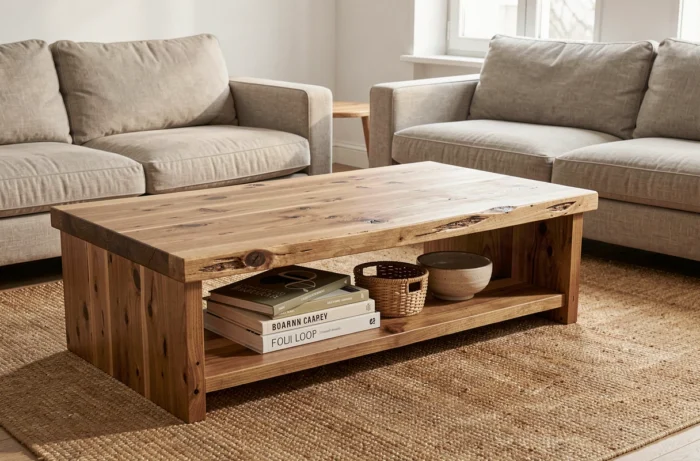
Furniture made from raw or recycled wood fits into the logic of practical personalization. A coffee table that combines a solid top with a storage niche underneath replaces both the serving table and the magazine box.
Opt for unvarnished wood, simply oiled. Oak, ash, or recycled pine age better than laminated veneer. The natural patina that forms over the months gives the piece a character that industrial finishes do not offer.
4. Zoned lighting to replace a single ceiling fixture
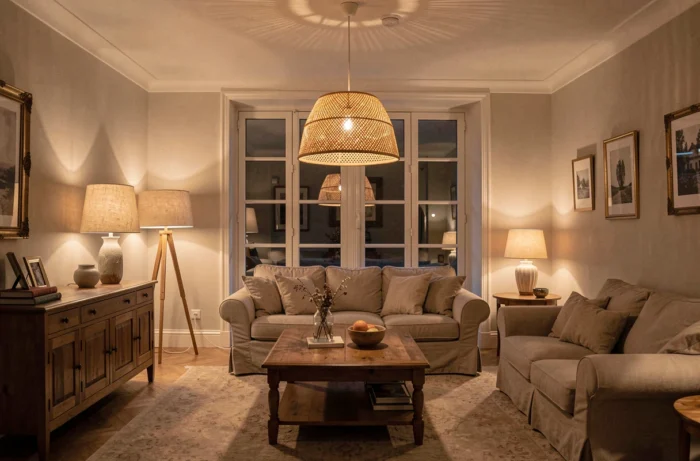
A central ceiling fixture flattens volumes and eliminates contrasts. Distributing three to four light sources within the same room redefines the ambiance without touching the walls or furniture.
The principle relies on layering: an indirect floor lamp for ambient light, an adjustable wall lamp for reading, a table lamp for the workspace or entry console. Varying color temperatures between zones (warmer by the sofa, more neutral by the desk) enhances the feeling of distinct rooms within the same space.
5. Textile accumulation with linen and artisanal weaves
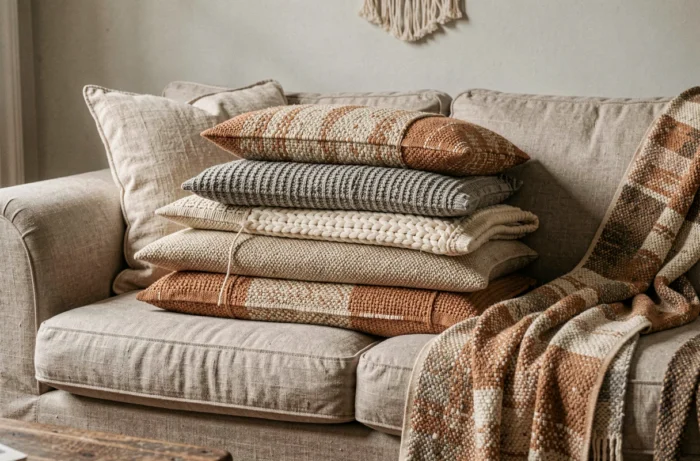
The accumulation of textile textures replaces the cold minimalism that dominated in recent years. The principle is simple: layer different materials on the same seat or bed.
- A washed linen throw for the base, providing drape and softness to the touch
- A cushion in thick weave (kilim, boucle, or braided cotton) for visual contrast
- A cover in corduroy or boiled wool for a pop of color
The goal is not decorative abundance. Each added textile should serve a purpose: the throw unfolds in the evening, the cushion supports the back during reading.
6. Saturated color on interior woodwork
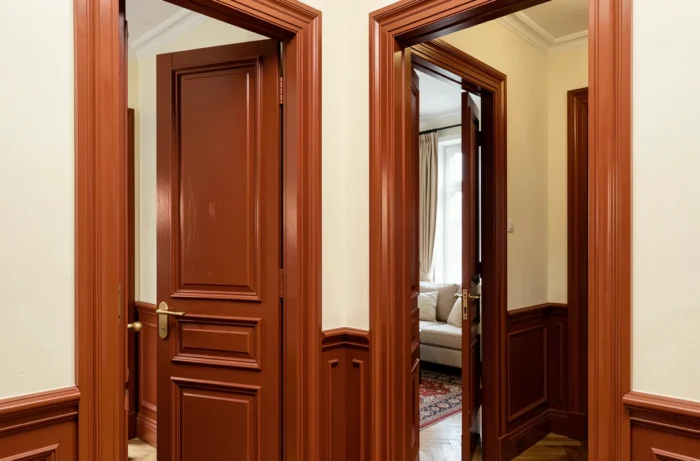
Painting an entire wall in a bright color requires boldness and sometimes perspective. Painting only the doors, baseboards, and window frames in a strong tone creates a more controlled effect.
A deep sage green, slate blue, or terracotta applied to the woodwork creates a visible architectural framing. The wall remains light, while the color structures the room with its lines. This method is suitable for small spaces where a fully painted dark wall might compress the volume.
7. Oversized mirror placed on the floor
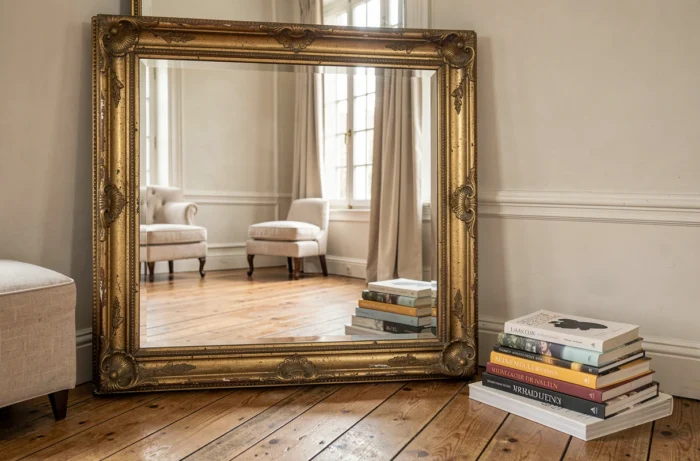
A large mirror leaning against a wall, without fixation, visually doubles the depth of a hallway or entryway. It captures natural light and redistributes it throughout the room, reducing the need for artificial lighting during the day.
The recommended size starts at 150 cm in height so that it exceeds the visual horizon line of a seated person. The frame matters as much as the glass: a raw wood or brushed metal frame transforms the object into an architectural element, not just a bathroom accessory.
8. Meditation space or mini spa in the bathroom
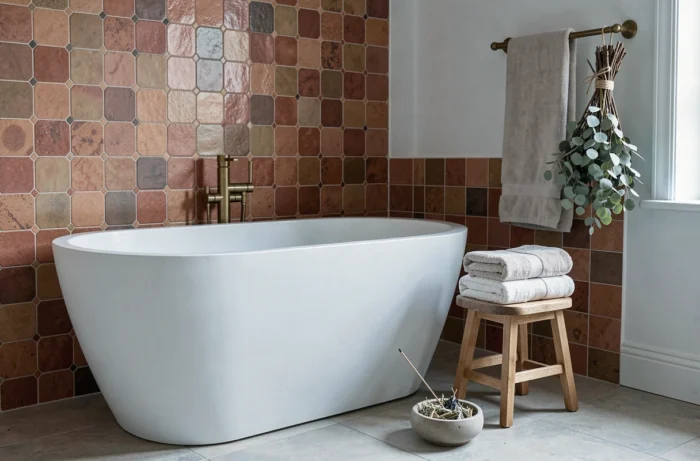
Wellness features in bathrooms have seen their mentions increase by 33% in real estate listings, and spa-inspired features by 22%, according to Zillow data from 2026. This does not require a complete renovation of the room.
A teak stool, a wall-mounted oil diffuser, indirect lighting under the vanity, and one or two moisture-tolerant plants are sufficient. The change relies more on intention than budget: creating a ritual in an existing space.
9. Thrifted decor items as conversation pieces
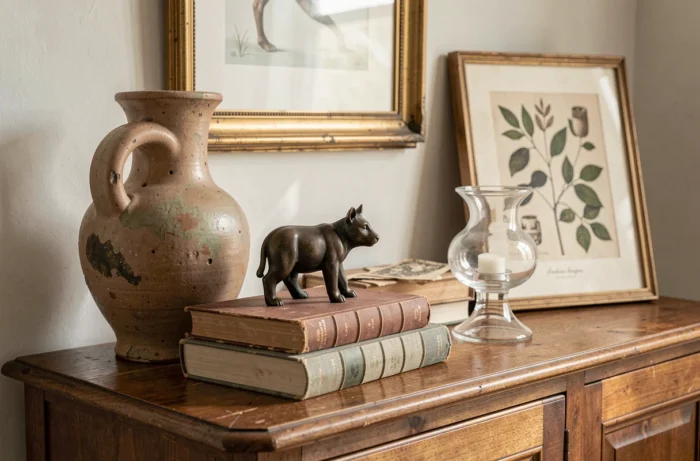
A thrifted item tells a story that new furniture does not carry. A stoneware vase found at a flea market, a patinated gold frame, a tarnished brass candlestick: these elements serve as visual anchors in a room.
The practical rule is to limit to two or three thrifted items per surface (shelf, console, fireplace). Beyond that, accumulation turns into clutter. A single strong object per zone draws the eye without competing with the rest of the decor.
10. Wooden slat screen to separate open spaces
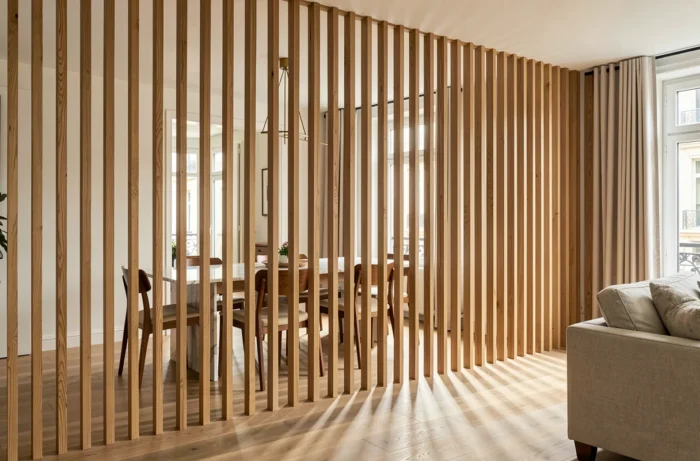
In open interiors, visual separation without hard partitioning remains a frequent challenge. A screen made of vertical slats spaced a few centimeters apart filters the view while allowing light to pass through.
This type of structure can be fixed between the floor and ceiling or stop at mid-height depending on the desired level of privacy. Light wood (pine, beech) integrates into a sober decor, while dark-stained wood enhances contrast in a light space. The screen can also serve as a support for climbing plants, thus combining separation and greenery.
Each of these ideas is based on a common principle: a decorative choice that serves a real use in the home. The current trend favors interiors where each element has an identifiable function, whether for comfort, storage, or light management. Starting with one or two of these arrangements is enough to change the perception of a space without engaging in heavy renovations.