
Clearing a property quickly does not depend on the number of hands available, but on the sequence in which decisions are made. A three-room apartment can be completely cleared in a weekend if each item follows a predefined circuit, from sorting to disposal. The factor that most often slows down the process is not the volume: it’s the repeated hesitation in front of each piece of furniture or box.
Cost and timeline for clearing a property: comparison of options
Before choosing a method, it is essential to measure what each option entails in terms of time and expense. The table below contrasts the three most common circuits for clearing a property.
| Option | Average timeline | Indicative cost | Main limitation |
|---|---|---|---|
| Self-clearance (sorting + dump) | Several weekends | Low (fuel, van rental) | Physical fatigue, management of bulky items |
| Clearing company | One to two days | Variable depending on volume and access | Requires quotes and verification of recycling channels |
| Distributor pickup + donations to charities | One to two weeks (collection slots) | Free for accepted furniture and items | Limited to certain categories of items |
The time gap between self-clearance and professional intervention is significant. However, combining free pickup and a service provider reduces the final bill, as the volume that needs to be paid for disposal decreases.
The choice mainly depends on the deadline. A property to be returned at the end of a lease in ten days does not allow for the same strategy as an estate with no immediate deadline.
Free pickup of furniture by distributors: a legal obligation often ignored
Since January 2022, the AGEC law requires furniture distributors to offer free pickup of used furniture as part of the Extended Producer Responsibility for Waste from Furniture Elements. Two regimes coexist.
- The “1 for 1” pickup: when purchasing new furniture, the distributor takes back a used piece of the same type free of charge at the time of delivery or in-store.
- The “1 for 0” pickup: in stores exceeding a certain sales area, the drop-off of used furniture is possible even without a purchase.
- The pickup also applies to electrical and electronic equipment (DEEE) through the eco-organization Ecosystem, following the same “1 for 1” or “1 for 0” principle in-store.
This is not a commercial gesture: it is a regulatory constraint stemming from the environmental code. Some distributors promote it as a CSR initiative when it is actually a legal duty.
To clear a property, utilizing this clearing solution on C Ma Déco alongside distributor pickup allows for handling bulky furniture at no extra cost and concentrating the budget on non-retrieved items.
Quick sorting by room: the method that avoids getting bogged down
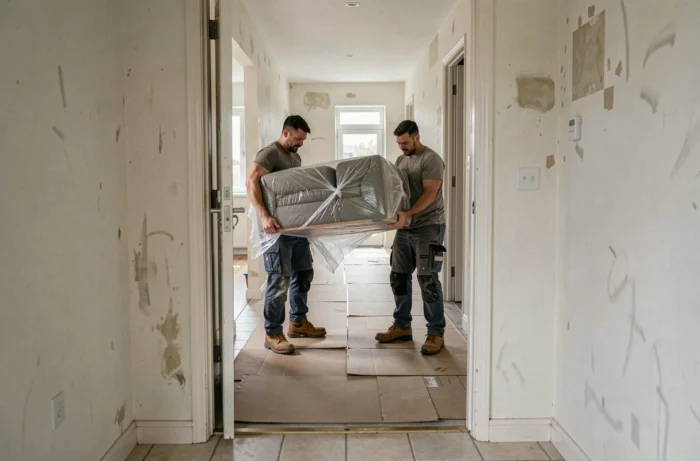
Competitors all recommend a preliminary inventory. The problem with a comprehensive inventory is that it consumes an entire day before even moving a single item. Sorting room by room without a global inventory speeds up the clearance because each completed area frees up maneuvering space for the next.
Start with rooms of low emotional load
The bathroom, pantry, or garage rarely contain sentimental items. Clearing them first creates a visible sense of progress that maintains motivation for the more difficult rooms (bedrooms, office).
Limit decision categories
Each item falls into one of these destinations: keep, give, sell, throw away. Four bins or marked zones on the floor are enough to eliminate back-and-forth trips. The most effective rule to avoid slowing down: if the decision takes more than ten seconds, the item goes into the “give” bin.
Organizations like Emmaüs or local recycling centers collect from homes, provided there is a minimum volume and a scheduled time slot. Planning this time slot before starting the sorting avoids accumulating bags waiting that clutter the partially cleared property.
Disposal of bulky items and waste: channels to know
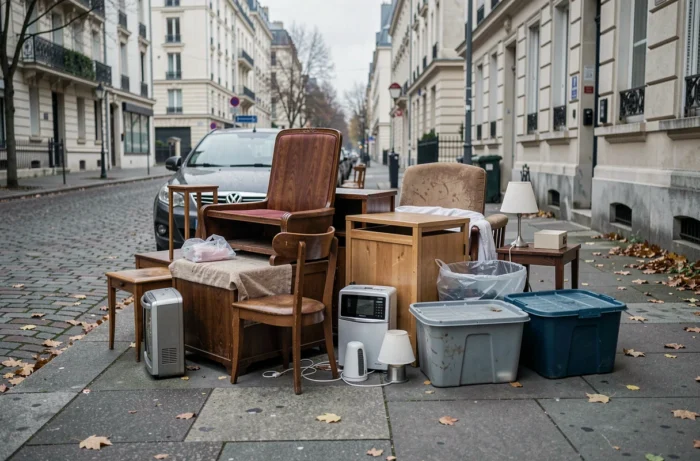
Once sorting is complete, disposal is the area that most often blocks progress. Municipal dumps accept individuals for free but impose schedules and volume limits per visit. Bulky items left on the sidewalk require an appointment with the municipal service, with wait times varying from one municipality to another.
Hazardous waste (paints, solvents, batteries) follows separate channels and cannot be mixed with regular bulky items. Ecosystem collection points handle electrical and electronic devices, including small equipment often forgotten at the back of closets.
For large volumes (full basement, attic), renting a dumpster remains an option to compare with the cost of a clearing service. The service provider includes labor and transport, which can end up costing the same as the dumpster alone when access to the property is complicated (floors without elevators, limited parking).
Cleaning after clearance: what conditions the return of the property
A cleared property is not a property ready to be returned. The marks on the floor left by heavy furniture, the dust accumulated behind storage units, and the residues in kitchen cabinets require methodical cleaning.
Cleaning each room immediately after clearing it avoids having to return to the same spot twice. Hard floors are treated with a vacuum and then a mop. Walls may retain marks from fixtures that require light filling if the lease demands it.
The final cleaning takes an average of half a day for a standard-sized apartment. For a house with a basement and attic, plan for a full day. This task is often underestimated in the planning, which delays the handover of keys.
The most useful piece of information to remember for planning a complete clearance: the free pickup by distributors and eco-organizations can absorb a significant portion of the volume to be disposed of. Identifying these channels before contacting a service provider allows for precise sizing of the paid need, often reducing it by half.